




Planning a wedding in Kansas City isn’t just about finding a beautiful location – it’s about controlling complexity. Most couples underestimate how quickly vendor coordination, logistics, and budget decisions spiral once planning begins. That’s exactly why all inclusive wedding venues in kansas city couples consider are gaining traction: they compress decisions, reduce risk, and simplify execution.
Kansas City’s wedding landscape has shifted. Couples are no longer optimizing purely for aesthetics – they’re optimizing for experience, predictability, and time. Between rising vendor costs, tighter schedules, and multi-day celebrations becoming common, the demand for structured venue solutions is increasing.
If you’re evaluating wedding locations in Kansas City, this checklist will help you cut through surface-level comparisons and focus on what actually impacts your wedding outcome – budget clarity, operational reliability, guest experience, and long-term value.
What All Inclusive Wedding Venues Kansas City Actually Include
The term “all-inclusive” is widely used but rarely standardized. In practice, it refers to venues that bundle core wedding services into a single offering – but the scope varies significantly between providers.
At a minimum, most kansas city wedding venues labeled all-inclusive will cover venue space, basic coordination, and some level of setup. More comprehensive venues extend this to catering, décor, furniture, and accommodation.
The concept exists because traditional wedding planning is fragmented. Each vendor introduces a new dependency – timelines must align, responsibilities overlap, and miscommunication becomes inevitable. All-inclusive venues exist to centralize those moving parts.
But here’s the reality: not all inclusive means complete. Some venues bundle services superficially, while others integrate operations deeply. That distinction determines whether your wedding feels controlled or chaotic.
Understanding Cost Structure Before You Commit
Cost is where most couples make their first major mistake. They compare headline pricing instead of total expenditure – and that’s exactly how budgets spiral.
Take the common assumption: is it cheaper to get an all-inclusive wedding venue?
The answer is conditional. It only works in your favor if the package actually replaces external vendors. The moment you start outsourcing key elements, the “all-inclusive” label loses its financial advantage.
Then comes the bigger question – how much does a wedding cost at an all-inclusive venue?
In Kansas City, realistic ranges are not small. You’re looking at anywhere from $15,000 for a smaller setup to $40,000+ for a fully built-out experience, depending on guest count and how extensive the services are.
A lot of people ask whether $30,000 is enough for a wedding. It is – but only if your expectations align with what that budget realistically delivers. Trying to force premium aesthetics into a mid-range budget is where most compromises start stacking up.
Another area people misunderstand is what’s actually included. When you ask what does an all-inclusive wedding package include, the answer is usually narrower than expected – venue rental, coordination, furniture, basic décor, and sometimes catering. Rarely everything you assume.
What actually matters is how you evaluate the cost structure:
- Transparent pricing structure
If pricing isn’t broken down clearly, assume you’ll discover costs later. Every inclusion should be line-item clear. - Vendor substitution limitations
Some venues restrict outside vendors. That simplifies planning, but it also locks you into their ecosystem. - Guest-based pricing models
Most packages scale per guest. That impacts catering, rentals, and staffing more than people anticipate. - Upgrade flexibility
The base package is almost never what you want. What matters is how upgrades are priced – not just that they exist.
The core mistake is assuming “all-inclusive” equals cost certainty. It doesn’t – unless the venue is operationally transparent from day one.
Budget Planning Frameworks That Actually Work
Budgeting isn’t about picking a number – it’s about controlling allocation. Most people fail here because they think in totals, not distribution.
Start with reality: what is a realistic budget for a 100 person wedding?
In Kansas City, that typically lands between $25,000 and $45,000 depending on the venue and how inclusive the package actually is.
Some frameworks try to simplify this. For example, people refer to the 50-30-20 rule for marriage or weddings – where 50% goes to core costs (venue and food), 30% to experience (decor, entertainment), and 20% is reserved as buffer or optional upgrades. It’s not perfect, but it forces discipline.
When scaling down, people assume costs drop proportionally. They don’t. What is a good budget for a 50 person wedding?
You’re still looking at $10,000 to $25,000, and in many cases, the per-guest cost actually increases because fixed costs don’t disappear.
Then there’s the unrealistic expectation zone. People ask if $5000 is a good budget for a wedding. It isn’t – not for any structured, all-inclusive venue. That budget fits micro weddings or DIY setups, not managed venue experiences.
Inside an all-inclusive model, budget allocation usually follows a predictable pattern:
- Venue + catering dominance
This will consume 60–70% of your budget. There’s no way around it. - Experience upgrades
Lighting, décor enhancements, and entertainment are where budgets quietly inflate. - Hidden operational costs
Service fees, gratuities, and overtime charges are consistently underestimated. - Contingency reserve
You need 10–15% set aside. Without it, you’re reacting to problems instead of absorbing them.
Structured venues reduce variability – but they don’t eliminate it. That’s the part most people ignore.
Venue Experience vs Aesthetic Appeal
Most couples overvalue how a venue looks and completely underestimate how it operates. That imbalance shows up on the wedding day.
Even with higher budgets, the problem doesn’t disappear. People ask if $100,000 is a good budget for a wedding. It is – but poor execution will still break the experience. Money doesn’t fix operational inefficiency.
The same applies to individual vendors. For example, how much is a DJ for a 5 hour wedding?
In Kansas City, you’re typically paying between $800 and $2,000. But even a great DJ can’t fix poor scheduling or bad transitions.
And again, expectations matter. Asking is $5000 a good budget for a wedding still leads to the same answer – it only works for minimal setups, not full-service venues.
Even timelines get misunderstood. Technically, how quickly can you get married in Kansas? Legally, fairly quickly. Operationally, planning timelines still dictate how smooth or chaotic the experience becomes.
What actually defines a strong venue experience isn’t visual – it’s functional:
- Guest flow management
Guests should intuitively know where to go at every stage. - Transition efficiency
Moving from ceremony to cocktail hour to reception should feel seamless – not forced. - Staff coordination quality
A well-run venue removes the need for constant instructions. - Comfort infrastructure
Seating, temperature control, and accessibility directly affect guest satisfaction.
A venue can look exceptional in photos and still fail in execution. And when it does, your guests feel it immediately.
Seasonality and Cost Timing Strategy
Timing isn’t just a detail – it’s one of the biggest financial levers you have.
People often ask what’s the cheapest month to get married. In Kansas City, that’s typically January through March. Low demand creates pricing flexibility.
Similarly, which day of the week is the cheapest to get married?
Fridays and Sundays are consistently lower than Saturdays.
On the flip side, what’s the most expensive day to get married?
Peak-season Saturdays – especially during fall – command the highest rates.
Then there’s demand rarity. What’s the rarest month to get married?
January and February, largely due to weather and lower demand.
Where this becomes practical is in how timing affects all-inclusive venues:
- Package pricing flexibility
Off-season dates often unlock discounts or added inclusions. - Vendor availability
You get more choice and less pressure when demand drops. - Weather considerations
Critical if your venue has outdoor components. - Guest attendance rates
Travel timing and seasonality directly impact turnout.
If you’re trying to optimize value, timing decisions usually matter more than negotiating price. Most people ignore that – and overpay because of it.
What Planning Looks Like in Reality
This is where most online advice fails – execution.
An all-inclusive venue reduces coordination, but it doesn’t eliminate decision-making. You’re still responsible for aligning vision, priorities, and expectations.
What Couples Actually Experience
- Compressed planning timelines
Decisions happen faster because fewer vendors are involved. - Reduced communication complexity
Fewer stakeholders means fewer breakdown points. - Less flexibility in customization
Structured systems limit how much you can deviate. - Higher dependency on venue quality
If the venue fails, everything fails – there’s no fallback.
Common Mistakes
- Choosing based purely on visuals
- Ignoring operational questions
- Assuming inclusions without verifying
- Underestimating upgrade costs
Where Private Venue Models Stand Out
In some cases, venues that combine event space with on-site accommodation – like private countryside properties – offer a different advantage. They shift weddings from a few-hour event to a full experience, allowing guests to stay, socialize, and engage beyond the ceremony itself.
For couples evaluating extended celebrations or destination-style weddings near Kansas City, reviewing options like a vacation lodge introduces a different planning model – one focused on continuity rather than fragmentation.
Should You Choose an All-Inclusive Venue?
This is where honesty matters. All-inclusive venues are not universally better – they’re context-dependent.
Choose All-Inclusive If:
- You value time efficiency over customization
- You want predictable planning and fewer decisions
- You prefer structured execution over flexibility
- You’re managing planning alongside work or travel
Avoid All-Inclusive If:
- You want full creative control
- You already have preferred vendors
- You’re optimizing for ultra-low budgets
- You enjoy detailed planning and coordination
Reality Check
Most couples think they want flexibility – until they experience the complexity. All-inclusive venues exist because decision fatigue is real.
Frequently Asked Questions
1. What is included in most all-inclusive wedding venues in Kansas City?
Most include venue rental, coordination, furniture, and basic décor. Some extend to catering and staffing, but inclusions vary significantly – always verify details before committing.
2. Are all-inclusive wedding venues worth it financially?
They can be, but only when they replace external vendors effectively. If you still outsource major services, the cost advantage disappears.
3. How far in advance should you book a Kansas City wedding venue?
Typically 9–18 months for peak dates. Off-season or weekday weddings offer more flexibility.
4. Can you customize an all-inclusive wedding package?
Yes, but within limits. Most venues allow upgrades, not full customization.
5. What’s the biggest risk with all-inclusive venues?
Over-reliance. If the venue underperforms operationally, you have limited control to fix it.
Where Simplicity Meets Experience
The appeal of all inclusive wedding venues in kansas city couples are considering isn’t just convenience – it’s control. The ability to reduce variables, compress decisions, and focus on the experience instead of the logistics.
But simplicity only works when the system behind it is solid. A structured venue with weak execution creates more problems than a flexible one with strong coordination.
Kansas City’s wedding market is evolving toward experience-driven events – multi-day gatherings, destination-style celebrations, and venues that offer more than just space. The real decision isn’t whether to go all-inclusive. It’s whether the venue you choose can deliver consistency under pressure.
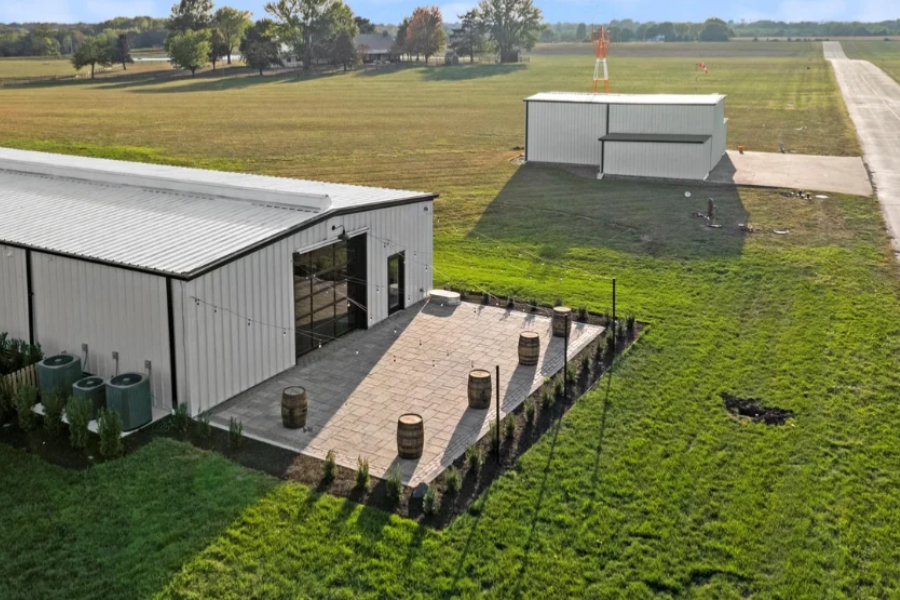
That’s exactly where venues like Blue Cedar Landing stand out – combining a scenic, private setting with operational structure that actually supports smooth execution.
Because in the end, what matters isn’t the package – it’s whether the experience feels effortless, or engineered under stress.


Comments are closed